Freestyling the Streets: Styles P Reminds Us Why Mixtapes Built Hip-Hop
By Diony C.
•February 20, 2026
•7 min read
A new Styles P freestyle and a revisit to Ghost in the Shell remind us that the culture that built hip-hop is still alive and well.
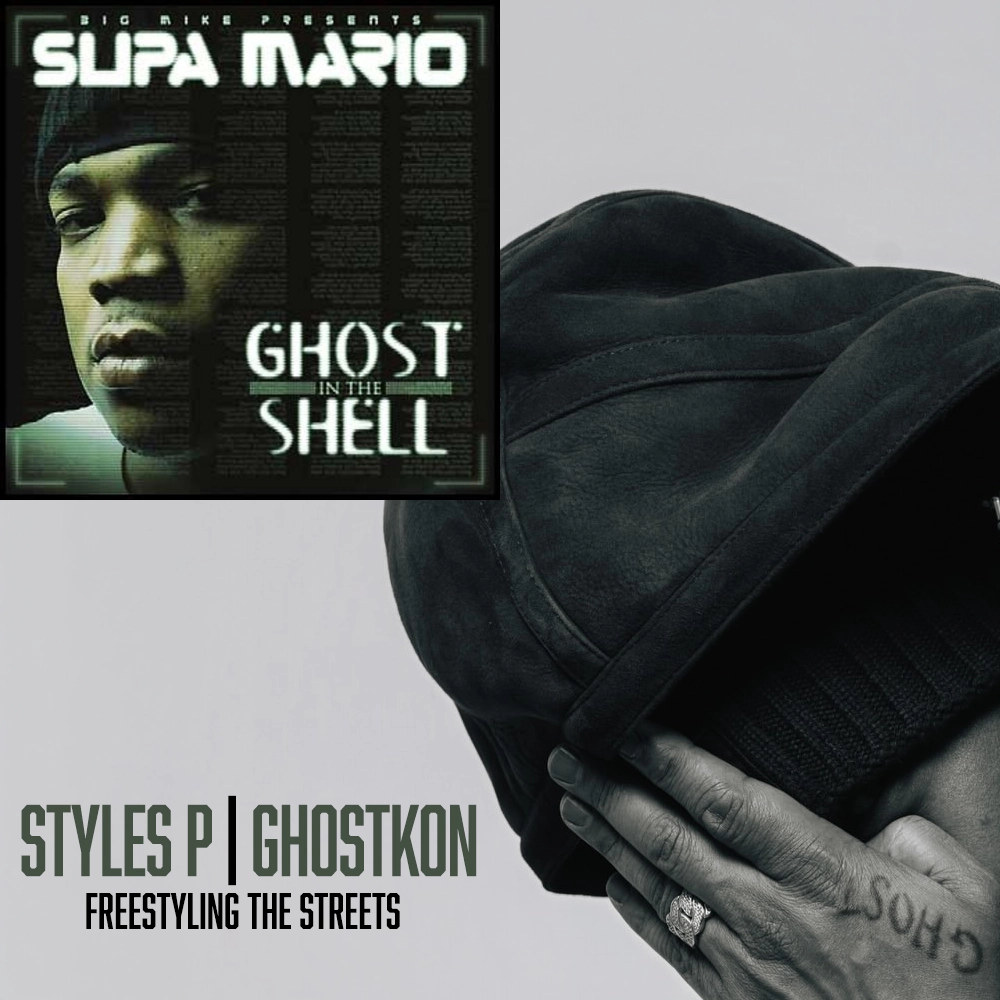
Some things never lose their edge. Some sounds never get old.
Last week, Styles P dropped a new freestyle online. No album launch, no flashy marketing, no multi-platform push. Just raw bars and hunger. For anyone who remembers mixtape culture, this is the kind of thing that still hits differently.
I clicked play and instantly felt it: the grit, the flow, the unfiltered skill that made the streets sit up and take notice. Styles P isn’t just showing he can still rap. He’s reminding us why freestyles used to be everything.
The Freestyle That Reminds Us
In an era dominated by streaming playlists and algorithmic drops, freestyles were the currency of credibility. DJs like DJ Drama, artists like 50 Cent and Lil Wayne, and crews across the city would watch, listen, and measure skill by how quickly someone could grab a beat and make it theirs.
Back then, the freestyle wasn’t a promotional tool. It was proof. It was the difference between someone who could rap and someone who was a rapper. No Pro Tools corrections. No writing session with a co-writer. Just you, a beat, and whatever you had inside. The streets didn’t forgive weak bars, and they never forgot a cold one.
Styles P built his entire identity on that standard. From his earliest days coming up in Yonkers with Jadakiss and Sheek Louch, the trio that would become The Lox earned their reputation through lyrical consistency and street-level credibility. They didn’t just sign deals. They convinced Puff Daddy to let them go when Bad Boy’s pop-leaning direction didn’t fit who they were. That’s not just a business move. That’s an artist knowing exactly what they stand for.
Styles P’s latest freestyle feels like a direct bridge back to that era: confident, hungry, and unafraid to flex lyrical muscle. This isn’t just a promo. It’s a statement. And in 2026, dropping something raw and unannounced without a rollout is actually a power move. It says the music is enough. It says you don’t need a campaign to justify showing up.
Styles P drops a raw freestyle, showing the same hunger that made mixtapes legendary.
More from Styles P:
Styles P - Good TimesRevisiting a Mixtape Classic: Ghost in the Shell
To understand why freestyles mattered so much, you have to go back to one of Styles P’s defining mixtapes. Ghost in the Shell, hosted by Big Mike and Supa Mario, released January 8, 2005.
This was peak D-Block era. The LOX had left Bad Boy, established their own lane under Ruff Ryders, and eventually planted their flag with D-Block Records. The streets were fully invested in what Styles, Kiss, and Sheek were building. And mixtapes were the primary channel for that conversation. Not radio. Not label-approved singles. The tape.
Ghost in the Shell was 32 tracks deep. That number alone tells you something. This wasn’t a polished EP designed for streaming metrics. It was an artist emptying out everything he had. Freestyles over borrowed beats, D-Block anthems, records with Jadakiss and Sheek Louch, introspective cuts, street cuts, everything. Supa Mario held it down as host, punctuating the tape with his signature Nintendo drops that became part of the mixtape era’s sonic texture. Big Mike’s name on the cover was a cosign from one of the era’s most respected curators.
What made Ghost in the Shell significant wasn’t just that Styles P rapped well on it. It was that the tape captured a moment. D-Block asserting its identity, Styles establishing himself as arguably the most prolific solo voice in the crew, and the mixtape format doing exactly what it was built to do: give artists a platform to speak directly to the people without a label filter in between.
Tracks like “I-95,” “D-Block Boyz,” and the full-LOX record “I Don’t Give a Fuck” weren’t radio-friendly. They weren’t trying to be. They were documentation. Evidence that something real was happening in Yonkers, and the tape was how that reality traveled.
Styles P would eventually make the project available on Apple Music and Spotify, giving newer listeners a way to experience a tape that helped define his legacy. But part of what made it resonate in 2005, and what still makes it land today, is that it was built for the streets first. Streaming was an afterthought. The tape was the point.
What Ghost Did That Albums Can’t
The album cycle has a shape. Singles, rollout, interviews, release, then whatever comes next. It’s a machine, and it works. But the mixtape operated differently. The mixtape was a direct line.
When Styles P stepped on Ghost in the Shell, he wasn’t performing for an A&R or positioning himself for radio rotation. He was talking to the people who already had his back, and proving to anyone on the fence that the bars were real. You could feel the absence of compromise in it.
That’s the thing about freestyle culture and the hosted mixtape era: the credibility was built through volume and authenticity, not scarcity and rollout. Artists dropped constantly. DJs were the gatekeepers. If a DJ put your tape out, it meant something. If the streets embraced it, it meant more. The commercial machine couldn’t manufacture that. You had to earn it.
Styles P earned it, repeatedly. Over a career that spans more than 15 solo projects, countless collaborations, and a DJ network that believed in him early, he built one of the most consistent catalogues in New York hip-hop. Not always the loudest name in the room, but always respected in it.
That’s the standard the new freestyle carries forward.
Why This Moment Matters
It would be easy to look at a freestyle dropping in 2026 and see it as nostalgia. Something an OG does to remind people he’s still here.
That’s not what this is.
What Styles P is doing, whether intentionally or just by instinct, is modeling the behavior that built the culture. Show up. Rap over something. Put it out. Let the work speak.
In an environment where artists spend months crafting rollouts and debating release strategies, the unannounced freestyle is a reminder that the music itself is still the most powerful tool. The platforms change. The algorithms change. The way a cold sixteen lands on a crowd that wasn’t expecting it. That doesn’t change.
Mixtapes were never just about the free music. They were about the direct relationship between an artist and the people who believed in them. That spirit is what Styles P is keeping alive. And that spirit is exactly what this site was built to document.
What’s Your First Mixtape Memory?
Everyone who grew up in hip-hop culture has a story. Maybe it was a tape you borrowed from an older sibling. Maybe it was something you found at a swap meet or received from a friend. Whatever it was, that first mixtape sparked something.
Share your first mixtape memory with #MyFirstMixtape on Instagram, and join the community keeping the culture alive.