Archive · G-Unit
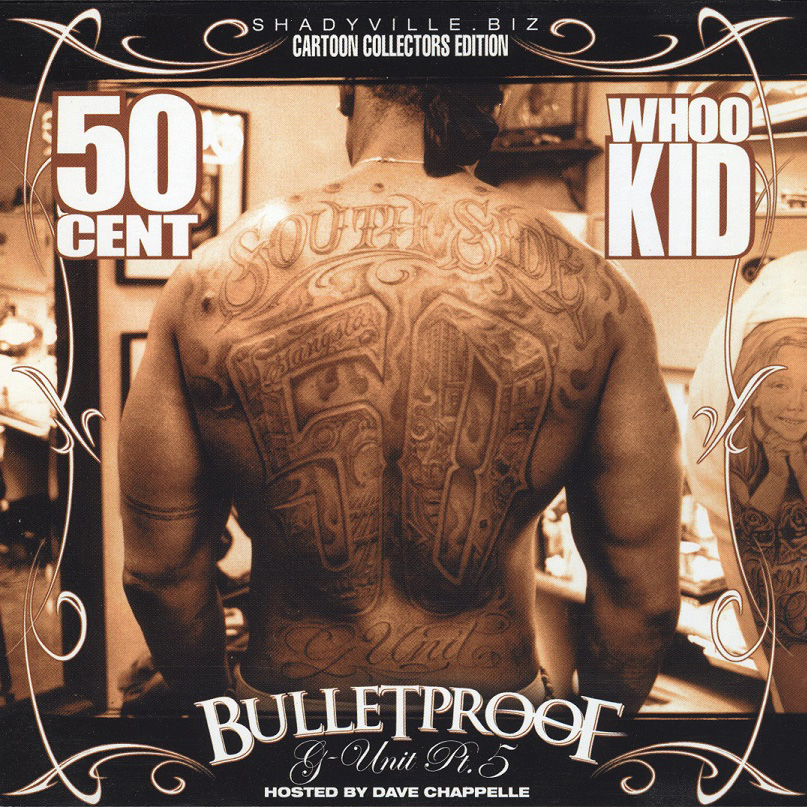
Bulletproof: G-Unit Pt. 5
By Diony C.
•April 7, 2026
•6 min read
The tape that bridged the grind and the arrival. DJ Whoo Kid and 50 Cent, hosted by Dave Chappelle, artwork by Mister Cartoon. Eighteen tracks of G-Unit operating at street level before the industry caught up. 2003.
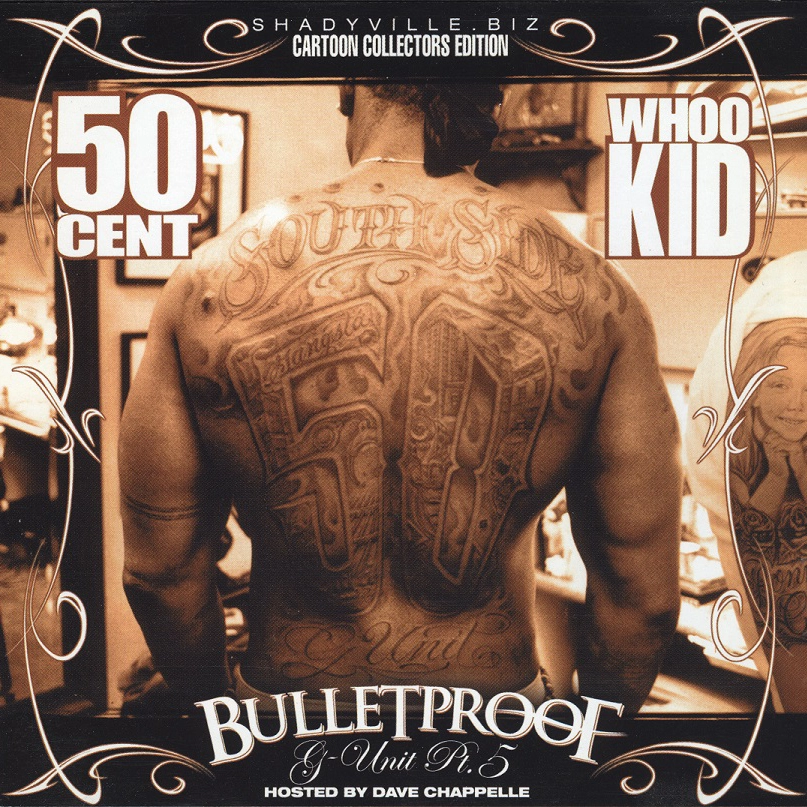
There is a version of 50 Cent that most people never heard. Not the one who sold nine million copies of Get Rich or Die Tryin’ in the first week. Not the one who feuded with half of hip-hop in public and won. The version before all of that. The one who was building something in the streets with a DJ from Queens and a comedian from Brooklyn, operating completely outside the label system because the label system had already turned its back on him.
That version lives on Bulletproof: G-Unit Pt. 5.
What This Tape Was
Released in 2003, Bulletproof arrived at the exact moment the mainstream caught up to what the streets already knew. Get Rich or Die Tryin’ dropped February 6, 2003. Bulletproof followed two days later on February 8. This was not a setup tape. The four G-Unit tapes Whoo Kid and 50 had already put out in 2002 did that work: Guess Who’s Back, 50 Cent Is the Future, No Mercy No Fear, and God’s Plan. Those four built the audience. By the time Bulletproof landed, the album was already in the world and selling. What this tape did was give that audience more: album tracks sitting alongside freestyles and exclusives, the full G-Unit picture in one place at the exact moment everyone wanted it.
The title tells you exactly where this sits. Bulletproof is G-Unit Pt. 5, the fifth in the original G-Unit tape run that Whoo Kid and 50 had been building since 2002: Guess Who’s Back, 50 Cent Is the Future, No Mercy No Fear, God’s Plan, and then Bulletproof as the fifth chapter. When the G-Unit Radio numbered series launched later in 2003 with Smokin’ Day 2, it carried that same DNA forward under a new banner. Worth noting for the collectors: G-Unit Radio Part 5 is a different tape entirely. All Eyez on Us, which dropped in 2004 with Tony Yayo freshly out. Bulletproof is the original fifth entry, the one that closed out the pre-album run before everything changed.
Dave Chappelle Hosting a 50 Cent Mixtape in 2003
The hosted mixtape had a specific grammar. You brought in someone with credibility and reach and you put them on the intro. DJ Kay Slay had rappers. DJ Clue had industry relationships. Whoo Kid had range.
Getting Dave Chappelle to host Bulletproof in 2003 was not an obvious move. Chappelle was not yet the cultural institution he would become when Chappelle’s Show went into full orbit later that same year. But he was already the right kind of credible: downtown New York, comedy world, the kind of co-sign that said something about where 50’s reach was going without saying it directly.
It was also a signal that the tape was not just for the block. When a comedian with Chappelle’s profile is on your intro, you are reaching into living rooms and college dorms, not just the corner. Whoo Kid understood that. He was building a coalition long before the word was used in marketing decks.
Mister Cartoon Did the Art
The cover of Bulletproof was done by Mister Cartoon, the Los Angeles-based tattoo artist and visual director who became one of the most important figures in hip-hop visual culture during this era. His client list ran from Eminem to Snoop to 50 himself. His work was inseparable from the West Coast lowrider and street art traditions, and the fact that his fingerprints were on a Whoo Kid and 50 tape in 2003 was another sign of how wide the G-Unit network was reaching before the album hit.
The Cartoon edition of Bulletproof is noted on Discogs as a specific variant of the release, distinguishing it from the standard pressing.
What Is on the Tape
Eighteen tracks. Lloyd Banks on three of them before the world knew his name. An unreleased Dr. Dre freestyle. Eminem on two tracks. The Game on one. Red Spyda production throughout. Tony Yayo locked up but still present in voice.
The tracklist reads like a document of what G-Unit actually was before the label positioned it for retail. No polish. No radio edits required. Just the crew operating at full capacity for an audience that had already decided they were worth following.
A few tracks worth noting specifically:
Follow Me Gangster with Banks and Yayo is the clearest statement of where the unit stood in early 2003. Don’t Push Me with Banks and Eminem is the kind of track that only exists on a tape, never on an album. Patiently Waiting appears here before its official release, which tells you everything about the function these tapes served. They were advance listening for people who were paying attention before the marketing budget turned on.
Cry Me a River (Remix) with Justin Timberlake is the outlier in the tracklist and worth acknowledging as exactly that. In 2003, that kind of cross-genre reach was either a bold move or a strange one depending on who was listening. Looking back, it was a preview of the commercial instincts that would make Get Rich or Die Tryin’ the record it became.
The Artists
Featured Artists
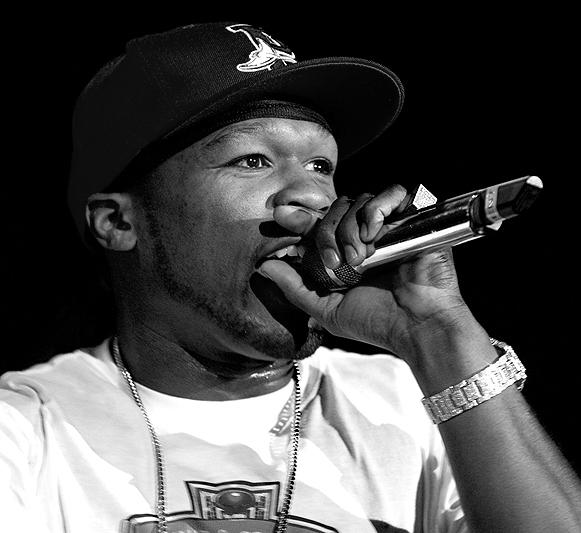
50 Cent
Follow Me Gangster, Don’t Push Me, Pimp (In Cold Blood Freestyle), Check It, Heat, Patiently Waiting, In Da Club, Like My Style, Cry Me A River (Remix)
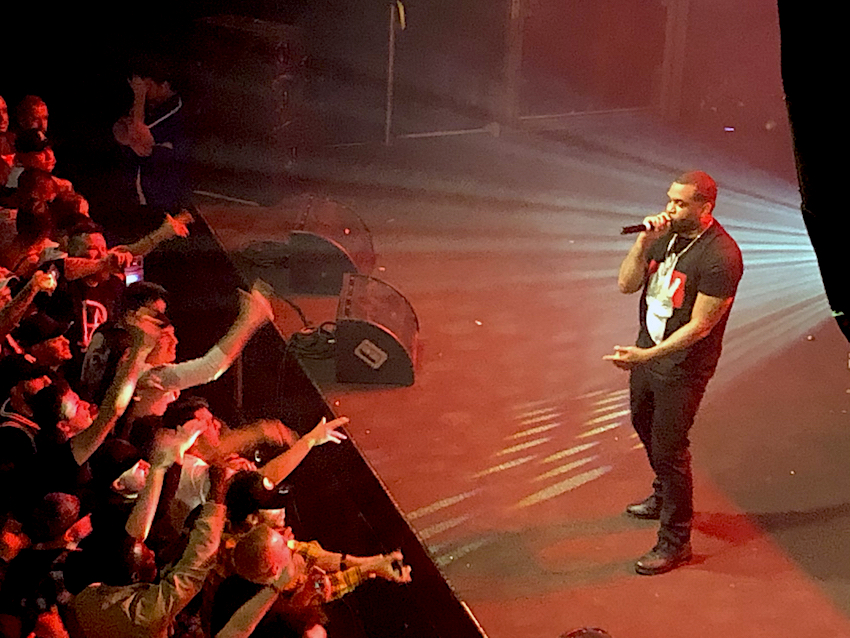
Lloyd Banks
Follow Me Gangster, Gangsta, Don’t Push Me, Freestyle, Pimp (In Cold Blood Freestyle), Porno Star, What Goes Around Comes Around

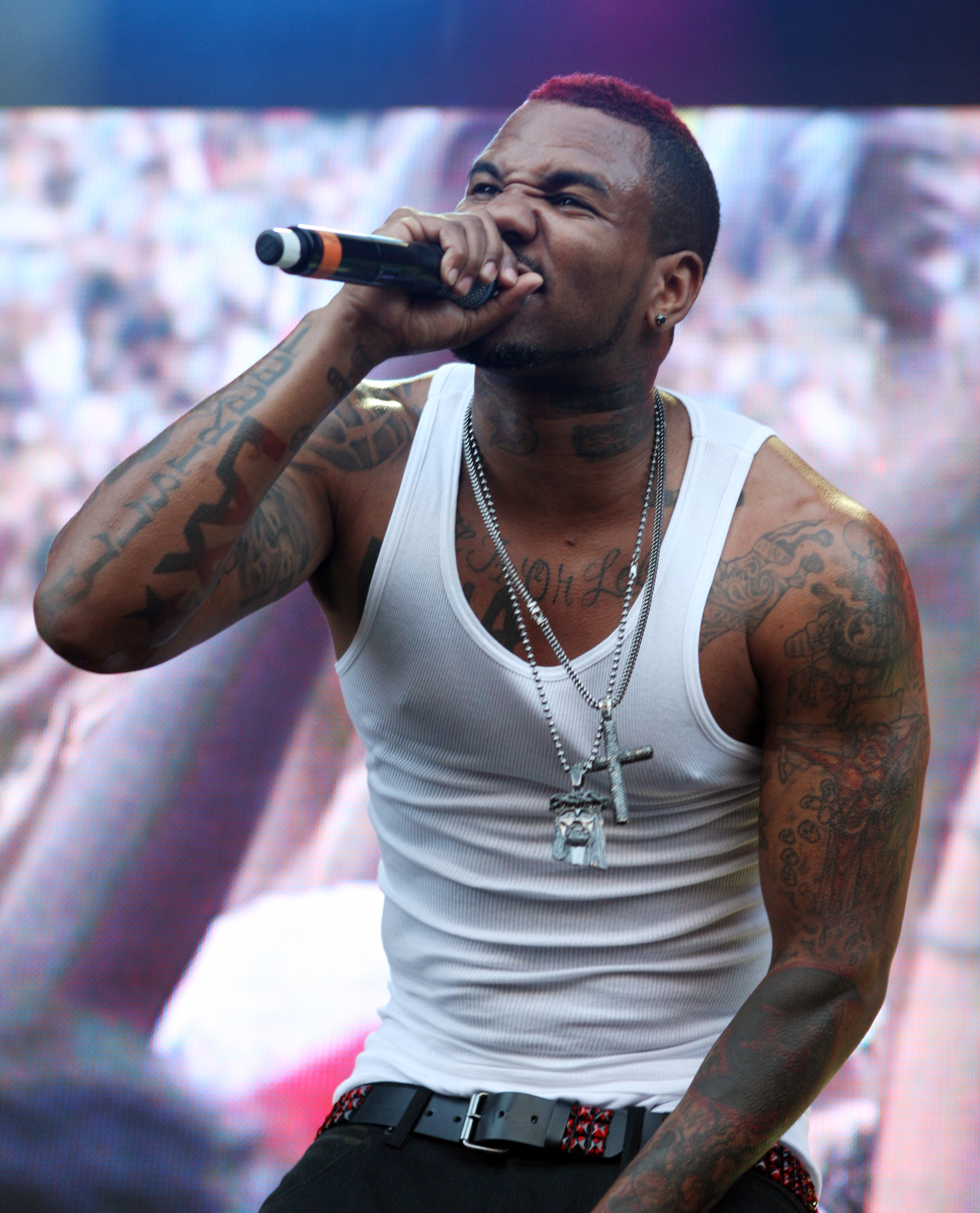
DJ Whoo Kid Built the Series
Bulletproof did not exist in isolation. It was the fifth in a sequence that Whoo Kid had been engineering since 2002, and it pointed directly toward the 25-volume G-Unit Radio series that would follow once the album dropped and the machine was in full motion.
What Whoo Kid understood before almost anyone else was that a DJ-anchored series could do something a single album could not: it could create a sustained presence in the streets across months and years, building familiarity and loyalty one release at a time. By the time Get Rich or Die Tryin’ came out in February 2003, the audience already knew the words. They had been listening for over a year.
The G-Unit Radio series that followed went 25 volumes deep and ran through 2008. Every member of the roster got their own dedicated volume. The numbered structure gave each release weight and made the series itself into a cultural artifact. That architecture did not come from the label. It came from Whoo Kid.
mixtapekings.com was part of the infrastructure that helped move these tapes. We were promoting G-Unit Radio when the series was still finding its legs, getting downloads and awareness out to the people who were tracking this stuff before the mainstream press caught up. That history is part of why this series belongs in the archive.
Start Here: G-Unit Radio Part 1
If Bulletproof is the tape that shows you what the grind looked like before everything exploded, G-Unit Radio Part 1: Smokin’ Day 2 is the tape that shows you when it did.
Released in March 2003, right alongside Get Rich or Die Tryin’, Part 1 is where Whoo Kid declared on the intro: “this is not a mixtape, this is a revolution.” He was not wrong. Fifteen tracks. Snoop Dogg hosting throughout. The P.I.M.P. remix with Don Magic Juan. True Loyalty with Banks and Yayo, recorded back when Yayo was still locked up and making his presence felt through the tape anyway. The Realest Killaz with 2Pac. Young Buck on his own track before most of the country knew his name.
Everything that Bulletproof was building toward, the audience, the credibility, the network, crystallized on Part 1. The series that followed ran 25 volumes over five years and gave every member of the G-Unit roster their own dedicated chapter. But it started here.
Props to Charlie C. at Tunelinks for the tape.