Archive
Killing the Daisy: How De La Soul Refused to Be Anyone's Hippies
By Diony C.
•July 17, 2026
•10 min read
Three kids from Amityville got called hippies for an album that changed rap forever, killed the flower on purpose, and thirty-six years later are still doing it their way. The full De La Soul story.
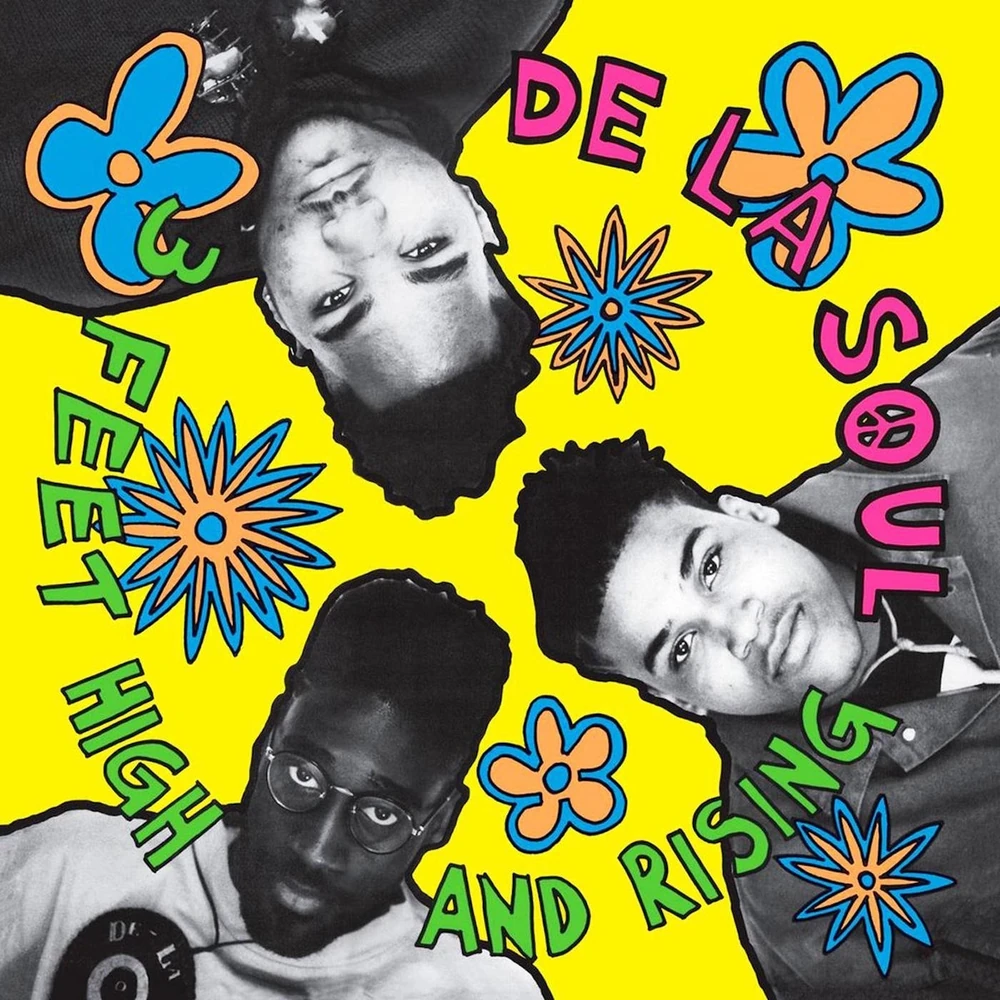
Three kids from Amityville, Long Island got handed a label before they had a chance to define themselves, and they spent the next three decades proving the label wrong.
Kelvin Mercer, David Jolicoeur, and Vincent Mason met at Amityville Memorial High School. Mercer and Mason had known each other since childhood. Jolicoeur showed up freestyling in the hallway one day and the group found its third voice. They started as Easy Street. Prince Paul, a local DJ and producer who was already making noise with Stetsasonic, heard a demo tape and brought them into the studio.
What came out of those sessions did not sound like anything else in hip-hop in 1989.
3 Feet High and Rising and the D.A.I.S.Y. Age
3 Feet High and Rising dropped on Tommy Boy Records in March 1989. Skits, a game show format between tracks, samples pulled from Steely Dan, Hall & Oates, Johnny Cash, and a Schoolhouse Rock cut nobody expected to hear flipped for a rap record. Posdnuos, Trugoy, and Maseo rapped like the whole thing was a conversation between friends, not a competition for who could sound hardest.
The press called it the D.A.I.S.Y. Age. Da Inner Soul, Y’all. Writers ran with the flower imagery on the cover and turned three serious MCs into hippies overnight. The group hated the label from the start. They were not selling peace signs. They were making a record that sounded like where they were actually from.
The album went platinum. Me Myself and I became a genre-defining single. And the Turtles sued over an uncleared sample on Transmitting Live from Mars, a case that helped rewrite how sampling clearance works in hip-hop permanently. The record’s influence on production technique matters as much as its influence on tone.
Killing the Daisy on Purpose
De La Soul Is Dead, 1991, opens with a broken flower pot on the cover. That image is the whole thesis. The group had spent two years getting boxed in as hip-hop’s gentle hippies and they responded by making a darker, more cutting record and burying the D.A.I.S.Y. persona in the dirt themselves.
It was a harder listen than the debut, and it did not chart as high, but it is the record that proved Mercer, Jolicoeur, and Mason were not going to let a magazine profile define who they were allowed to be. Buhloone Mindstate followed in 1993, jazz-inflected, guest spots from Biz Markie and Fu-Schnickens’ Chip-Fu on Ego Trippin’ Part Two, another record that pushed away from whatever the audience expected next.
Stakes Is High and the Turn
By 1996 De La Soul had a real problem to name, and Stakes Is High names it directly. This was the first De La Soul album made without Prince Paul, and the sound changed with his absence. Self-produced for the most part, with additional production from a young J Dilla, who gave the title track its instrumental and helped set the tone for where the whole record was headed.
Stakes Is High dropped July 2, 1996. Nas released It Was Written the same day. Two different corners of New York hip-hop putting out defining statements on the same afternoon, one leaning further into mafioso rap, the other pulling back to ask what all of it was actually building toward. Stakes Is High features an early Mos Def appearance on Big Brother Beat and Common on The Bizness, both years before either artist became a headline name in his own right. Tupac Shakur took the album’s opening line personally enough to respond on his own posthumous record. That is how seriously people were listening.
The Comeback and the Long Middle
Art Official Intelligence: Mosaic Thump landed in August 2000 after a six-year gap, and it put De La Soul back into chart conversations they had never really left creatively but had drifted from commercially. Oooh and All Good, both built around guest spots from Redman, Busta Rhymes, and the Beastie Boys’ Mike D and Ad-Rock, earned a Source Award nomination and a Grammy nomination for Best Rap Performance by a Duo or Group.
AOI: Bionix followed in 2001, the back half of the AOI project, before The Grind Date in 2004 closed out their run on a major label. Then a long stretch of side projects, guest verses, and the slow-building Kickstarter campaign that funded and the Anonymous Nobody, released in 2016 and debuting at number one on the Top Rap Albums chart. A fully independent, crowd-funded comeback from a group that had spent a decade being treated like a nostalgia act.
The Fight for the Masters
For most of the 2010s, none of De La Soul’s first six albums existed on any streaming platform. Not because the group did not want them there. Sample clearance issues going back to the Turtles lawsuit, combined with a Tommy Boy deal that would have paid the group only 10 percent of streaming revenue, kept the whole Tommy Boy-era catalog locked out of digital release entirely.
De La Soul refused the deal publicly, called for a boycott of Tommy Boy, and got Nas and Questlove to back them. It took Reservoir Media acquiring Tommy Boy for $100 million in 2021, and De La Soul regaining control of their masters that same year, to finally break the standoff. On March 3, 2023, the 34th anniversary of 3 Feet High and Rising, the entire Tommy Boy-era catalog hit streaming for the first time in De La Soul’s career. Two decades of fans who had been trading rips and bootlegs finally got the real thing, legally, on the group’s own terms.
Cabin in the Sky
David Jolicoeur died in February 2023, weeks before the catalog finally reached streaming. He never got to see the fight end.
Cabin in the Sky arrived in November 2025, De La Soul’s first album since his passing and their first collaboration with Prince Paul since the earliest records. It is built around previously unreleased vocals from Jolicoeur, features from Black Thought, Q-Tip, Nas, Common, Slick Rick, and Killer Mike, and it does not read as a grief record even though it plainly is one. Mercer and Mason made a joyous, generous album in his honor instead of a heavy one, which is exactly the kind of choice De La Soul has been making since they buried the flower on purpose in 1991.
Thirty-six years after Amityville, the group is still deciding for itself what the next record gets to sound like.
And if you want to hear what that influence sounded like at the twenty-year mark, the archive has it: Le Da Soul (20 Years of De La Soul), the 2009 tribute mixtape from Mick Boogie and DJ Terry Urban, twenty classics remade by twenty different artists, is streaming on the native player now.
Watch
De La Soul’s Tiny Desk Concert, released March 3, 2026, on De La Soul Day. Posdnuos and Maseo perform Cabin in the Sky material alongside Stakes Is High and Breakadawn, closing on Me Myself and I, with Dave’s spirit and vocals woven through the set.
In the Shop
Every De La Soul title carried at mixtapekings.com is documented below.
In the Store
3 Feet High and Rising (2xLP, Yellow Vinyl)
$38.98
The 1989 debut. Where the D.A.I.S.Y. Age started and where the label first got hung around their necks. Yellow vinyl.
Shop 3 Feet High and RisingArt Official Intelligence: Mosaic Thump (2xLP)
$36.98
The chart-comeback record. Black 140g vinyl, 2023 Chrysalis reissue.
Shop Mosaic Thump 2xLPArt Official Intelligence: Mosaic Thump (CD)
$16.98
The chart-comeback record on CD. Oooh, All Good, and the guest run that earned the Grammy nod.
Shop Mosaic Thump CDAOI: Bionix (CD)
$16.98
The 2001 follow-up on CD, closing out the two-part AOI experiment.
Shop Bionix CDCabin in the Sky: Marvel Variant Edition (2xLP, Marble Vinyl)
$32.98
The 2025 tribute to David Jolicoeur. Their most recent record and the one written in his memory. Marble vinyl.
Shop Cabin in the SkyMore Music
For the twenty-year tribute this whole story built toward, the archive has Le Da Soul (20 Years of De La Soul) streaming on the native player, and for another Mick Boogie curation, Dillagence, the Busta Rhymes over J Dilla tribute.
Subscribe to the What’s Good newsletter for more from the archive.
Get the Newsletter