
Questlove has called J.PERIOD "the most creative mixtape producer of all-time." His Best of Lauryn Hill made MTV's list of the top mixtapes of 2005 and put him on tour as her DJ. He built The [Abstract] Best with Q-Tip, helped take The Hamilton Mixtape to No. 1 on the Billboard 200, and turned The Live Mixtape into a stage show with Black Thought, Yasiin Bey, and Rakim. Last fall he made a mixtape with sneaker designer Salehe Bembury, built to put listeners in a creative flow state. This year, he's taken The Live Mixtape to Philly, Los Angeles, New York, Phoenix, New Orleans, and London. We talked to him about the tape that carved his lane, the FaceTime that put him in charge of The Hamilton Mixtape, and what makes music worth burying in a time capsule.
Questlove has called you the most creative mixtape producer of all time. When did you first realize the mixtape could be more than a DJ tool, that it could be a vehicle for storytelling and archival work?
My favorite Hip Hop was always a vehicle for storytelling and teaching; as a kid, I used to write down KRS lyrics and look up the references to understand the history he was talking about. The turning point for me came when I was invited to a listening session for God's Son, with Nas actually in the room, and while he was sharing stories from his career, I thought how cool it would be to mix those audio clips with his music to help bring the stories to life. I had no idea what that revelation would evolve into, but I loved the idea of creating these little time capsules of my favorite artists' work, and I definitely saw the seed of something worth exploring in that moment.
Your Best Of series built your name on the audio biography format, interviews woven into the music. Was there one tape in that catalog that made you feel like you'd found your lane?
The Best of Nas mixtape was definitely the birth of the style, but the Best of Lauryn Hill mixtape is what started to carve out a new lane. Part of it was the magic of hearing her share commentaries and insights you'd never heard before, combined with the collective power of all her music in one place, back to back. It was like a documentary movie that made your head nod, but in audio form! The [Abstract] Best project with Q-Tip came next, and that one is probably still the benchmark.
Bandcamp pays artists and labels directly. Support J.PERIOD on Bandcamp
Last October you and Salehe Bembury released Creative Flow State, a mixtape built to trigger a creative flow state, timed to his Rizzoli book, I MAKE SHOES, and the launch of his new sneaker brand, Spunge. This spring you followed it with an exclusive instrumentals edition. How did a collaboration with one of the most influential footwear designers out there come together, and what does it say about where the mixtape can live today?
Salehe is an incredibly talented and innovative sneaker designer. When I first met him, he was excited to tell me that he played my mixtapes all the time in his studio while he was creating his designs. I loved the idea that my mixtapes were being used in that way, to help other artists generate their own ideas, and so Salehe and I hatched a plan to create a whole project like that: a mixtape to inspire creativity. The result was Creative Flow State, a vibe-heavy soundtrack of instrumental beats and words of creative inspiration from Salehe, which we released to accompany the launch of his new sneaker company, Spunge. Never underestimate the power of curation to spark creativity!
The Hamilton Mixtape went No. 1 on the Billboard 200. What did that moment teach you about how far the format can travel when the curation is right?
The most powerful lesson of The Hamilton Mixtape was what becomes possible when there's resources behind a great idea. Hamilton was such a phenomenon that it opened up new possibilities on Broadway, and created an unprecedented launchpad for The Hamilton Mixtape. When I was originally approached by Riggs Morales about producing a mixtape to promote the show, Hamilton was still trying to get its footing as a play. My original demo was the cast recording of "Ten Duel Commandments" remixed over the beat from Biggie's "Ten Crack Commandments."
Months later, when Questlove recruited me to help with the Mixtape, the show had already graduated to another level: now Alicia Keys, Busta Rhymes, and Sia had recorded their own versions of the Broadway songs. When I went to meet Questlove at Electric Lady Studios to discuss, he handed me his phone with Lin-Manuel Miranda on FaceTime. "You guys go work it out!" he said.
My approach was the same as any other mixtape I had produced: the most compelling songs arranged in the most exciting way. In fact, I sat in the corner of the room and made the blueprint for the tape right there on the spot. My process was the same, but the results were unlike anything I had seen before: my first gold plaque and a Billboard #1 album in its debut week. Grateful to Questlove and Lin-Manuel Miranda for entrusting me to bring the vision to life!
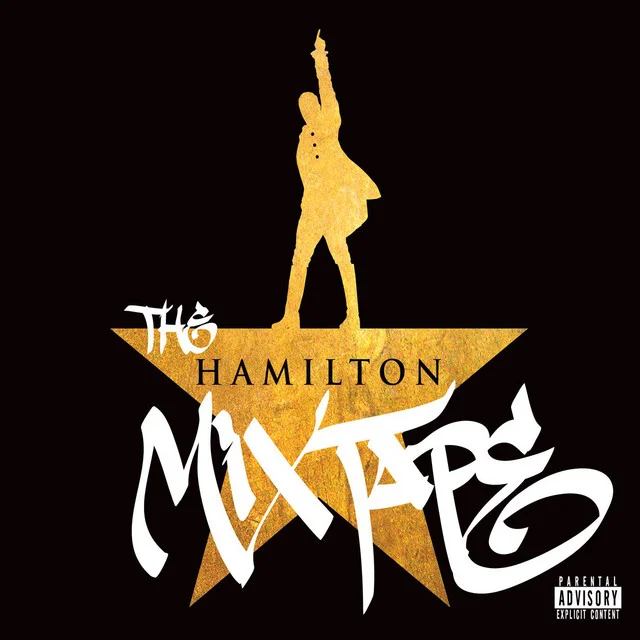
The Billboard No. 1 he talks about above. Open on Spotify
You've taken the Live Mixtape into real rooms with Black Thought, Yasiin Bey, Rakim, and Busta Rhymes. The format has gone from cassette to download to live performance. What has stayed essential about what a mixtape is supposed to do?
A mixtape is designed to do what the best Hip Hop is designed to do: pick the hottest parts and synthesize them in a way that makes the mixture undeniable. If you're listening on your headphones running around the track, what keeps you locked in? If you're on a road trip, what gets you through that extra hour? If you're cleaning your house, what helps make the work feel fun? If you're at The Roots Picnic, what surprise performer is going to make you lose your mind? For me, the Mixtape is the last genuinely authentic Hip Hop format: it curates a unified experience out of scattered elements, and makes the whole greater than the sum of the individual parts. That's the spirit of Hip Hop.
When you build a tribute around a specific year or artist, from Class of '95 to your 2Pac edition, how do you decide what belongs and what gets left out?
With every one of these mixtapes, there's a huge amount of research that goes into it. With artist tributes like the 2Pac tape, you're watching documentaries, listening through the catalog, and trying to immerse yourself in the sound and style of that artist until you find the essential parts of the story. Ultimately, that's what "curating" is: finding the parts of the story you can't live without.
The Class of 95 mixtape is unique because when I was approached to create the tape, I was already immersed in research for The Roots' "Class of 95" Hollywood Bowl concert, featuring Mobb Deep, Lil Kim, Goodie Mob, Method Man, Redman, and others. In that case, curation becomes a deep dive to make sure every style, region, and sound is covered. There's definitely a science to the selection, but ultimately the decisions come down to the same idea: what feels most important to the story you're trying to tell? What enhances the vibe and makes it better?
Vinyl and physical formats have become genuinely popular with collectors again. From where you sit, is that a real cultural shift, or is nostalgia doing most of the heavy lifting?
The truth of that trend is much deeper, which is a longing for physical media in this streaming era where fans no longer even own the music, but borrow. A piece of vinyl is a large format piece of art, a sensory experience, and a collectible you can display. For those of us who grew up touching vinyl, or making pause tapes on cassettes, or flipping through CD books, there is no replacement. I'm glad to see the younger generation discovering this. The accidental result might even be a new generation of music fans who appreciate the power of being able to hold and explore a piece of art created by your favorite artist.
Your catalog on Bandcamp keeps growing. What does that direct-to-fan relationship mean to you as a curator, and how does it shape what you put out and when?
Since the pandemic, Bandcamp has been an amazing platform for us to connect directly with fans, get feedback, and grow a core community. I've been living outside the traditional lines of the music industry for a long time now, so it's incredible to have these new platforms available to bypass the traditional roadblocks of the industry to find your audience. These days, that's really the name of the game: find your audience.
When you're building a project around an artist's catalog, what signals tell you a body of work has real collector depth versus music that gets consumed and forgotten?
I don't really traffic in music that gets consumed and forgotten, either as a fan or as a DJ. I'm not opposed to catchy records; I play clubs and love to rock parties. But for a mixtape, something I'll listen to over and over, the bar of entry is that it has to have staying power; it has to be something so good that I'd bury in a time capsule for someone to discover in 50 years. Hip Hop has the ability to move your body, but also move your mind, inspire you, make you think, make you look at the world differently. The best Hip Hop accomplishes all those things at once, and for me that is what signals true staying power: when an artist truly represents and respects the culture, and uses the music to carry a deeper message. Those are the stories I want to share, and help keep alive.
If an independent artist or DJ came to you wanting to build something with real staying power, what's the one thing most of them underestimate?
You can't underestimate the power of being yourself, of being an authentic and original version of you. People get caught up in expectation and trying to fit an image; break the mold, be fresh, be original, there's only one version of you.
Last question: who or what should mixtapekings.com spotlight next in this series?
So many amazing DJs in my orbit! Peace to all the DJs rocking with me on The Live Mixtape on Apple Music!
DJ Rashida (Prince), DJ Mal-Ski (Stevie Wonder), DJ Severe (L.A. Dodgers), DJ Spider (Travis Barker), DJ Aktive (Janet Jackson, Common), DJ Umami (San Francisco Giants)
Six names from the DJs who fill out J.PERIOD's Live Mixtape series on Apple Music. Every one of them is now on our list.
J.PERIOD is also on the road with cultural historian Josh Kun for The Art of the Crossfade, a tour that pairs a musical lecture and storytelling workshops with a Live Mixtape performance.
J.PERIOD is a Brooklyn-based DJ, producer, and musical storyteller whose Best Of series turned the mixtape into an audio documentary. His collaborators include Nas, Ms. Lauryn Hill, Q-Tip, The Roots, Mary J. Blige, and Lin-Manuel Miranda on The Hamilton Mixtape, a Billboard No. 1 album. His Live Mixtape series has played The Roots Picnic, The Kennedy Center, Lincoln Center, and the Brooklyn Academy of Music.
Collector Spotlight continues. If you know a DJ, collector, or curator whose perspective deserves a platform, let us know.
Get Early Access